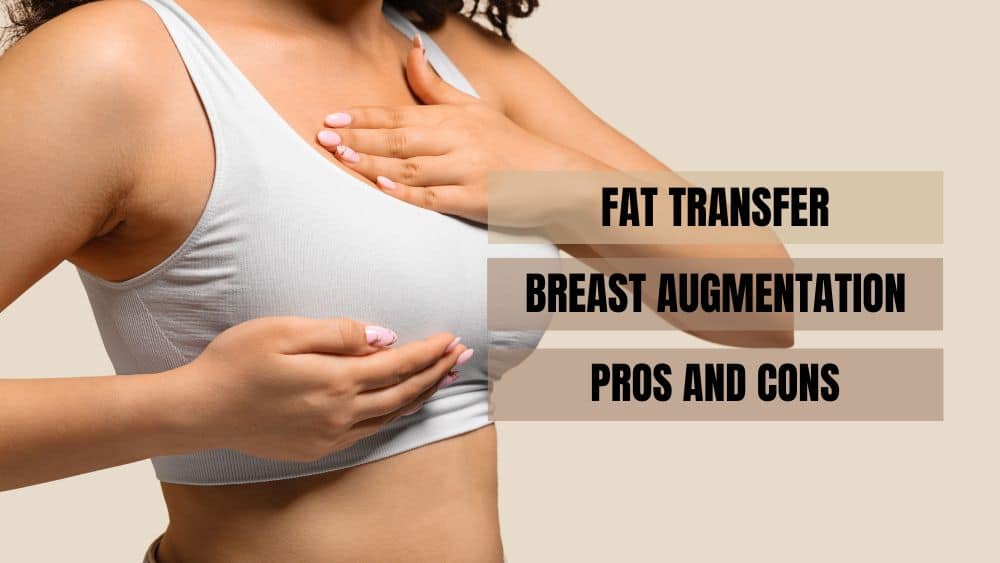
Considering larger breasts? You have two main cosmetic surgery options when it comes to increasing the size of your breasts: Breast augmentation with breast implants or fat transfer breast augmentation.
Below, we’ll be taking a closer look at the latter by outlining the major fat transfer to breast pros and cons. But first, what is fat transfer to breast surgery?
What Is Fat Transfer to Breast Surgery?
Fat transfer to breast surgery is a cosmetic procedure that takes the patient’s unwanted body fat (from the abdomen, back, flanks, thighs, arms, chin, etc.) and transfers that fat to the breasts. If you look at fat transfer to breast before and after photos, you’ll notice this surgery can reduce unwanted fat elsewhere on the body while modestly increasing the size of the breasts.
Understanding How Fat Transfer Breast Augmentation Works

A natural breast augmentation procedure is an innovative plastic surgery technique that enhances breast volume using your body fat. During this outpatient procedure, the first step is to remove fat from areas with stubborn deposits through liposuction. The harvested fat is then purified and strategically re-injected into the breasts to promote a subtle and natural breast augmentation result.
Unlike traditional breast augmentation, which relies on implants, this approach uses autologous fat grafting — meaning your own fat cells are used to enhance the breasts. This method reduces the chance of allergic reactions while supporting smooth fat distribution and long-lasting results. A compression garment is typically worn after surgery to support healing and optimize your new body contouring results.
Because this procedure works with your existing breast tissue, the increase in breast size appears soft and natural. Most healthy people enjoy a quick recovery under general anesthesia, returning to normal physical activities within a few weeks. Using harvested fat not only minimizes scarring but can also be applied in breast reconstruction cases or to refine traditional breast augmentation outcomes.
While rare, minor risks such as fat necrosis may occur if some fat cells do not survive the transfer process. However, studies show that when performed by an experienced surgeon, fat cells integrate well with surrounding breast tissue, maintaining the shape and softness of the breasts. This approach also does not increase breast cancer risk, making it one of the safest options for natural breast augmentation and breast reconstruction.
Pros of Fat Transfer Breast Augmentation
No breast implants required
With a fat transfer procedure, no breast implants are needed to augment your breast size. For many women, this is a great benefit simply because the idea of having foreign objects in their bodies is unappealing.
Likewise, if you don’t have implants, you don’t have to worry about issues such as capsular contracture (hard and painful scar tissue), breast implant illness (BII), or ruptures.
No regular imaging tests required to check on implants
With silicone implants, especially, patients need to be periodically checked for potential breast implant ruptures. This can be annoying to many patients and expensive.
Furthermore, if a rupture is indeed found (whether through an imaging scan or by the naked eye after a rupture of saline implants), breast implant surgery will needed to remove and replace the implant.
Natural looking results
The breast size increase you achieve with a fat transfer to breast will look very natural. This is because we are using your body’s own fat to make the size adjustment.
Reduction of unwanted body fat
For many patients, one of the most exciting benefits of fat transfer breast augmentations is the reduction of fat cells from “trouble areas” like the waist, flanks, and back. We can also take fat from the upper arms, thighs, chin, and elsewhere. This fat grafting element means that breast fat transfer surgery is like a two-for-one procedure.
Minimal scarring
Traditional breast implant surgery does not leave very noticeable scars, but the scars that result from fat transfer breast augmentation are even smaller.
Liposuction leaves the most significant scarring when compared to those left by the fat injections. And even then, these scars are typically just a few millimeters long. Once they heal, they should flatten, blend, and fade with your surrounding skin so that each one usually ends up looking like just a small freckle.
Fat Transfer Breast Augmentation Before and After

Cons of Fat Transfer Breast Augmentation
The most common breast fat transfer side effects are mild swelling, bruising, and tenderness in the treated areas. These effects are temporary and typically fade within a few weeks as your body heals.
Breast volume increases have to be modest
Unfortunately, breast fat transfer procedures can only achieve a breast size increase of up to about one cup size. This varies from person to person, but the average increase is moderate. For those seeking a more noticeable enhancement than fat transfer can provide, breast implants are the preferred option.
Patients must have enough fat to start with
Some patients will not be good candidates for this surgery because they simply don’t have enough unwanted body fat. It’s more likely that a patient might not have enough excess fat for a more significant fat transfer procedure such as a BBL (Brazilian butt lift).
Not all fat survives the transfer process
Finally, in order for the fat transfer to be successful and for the resulting breast tissue to actually plump up and make the breasts appear larger, the transferred fat must survive. There is really no way of knowing how much fat will make it through this process.
Following your recovery instructions closely, resting, sleeping in the proper position, and keeping pressure off your chest will help to aid fat retention, but in rare cases, not enough fat will survive the transfer to achieve your original goals.
Achieving Natural Results with Fat Transfer
This breast procedure offers a natural way to enhance natural breasts using your own fat cells. During surgery, your surgeon will carefully remove fat from selected donor sites such as the abdomen, thighs, or flanks through small incisions. The purified fat cells are then injected into the breast area under general anesthesia, allowing them to merge smoothly with your natural breast tissue and improve breast shape for fuller breasts and a beautifully natural result.
Because this technique is minimal invasive, most patients experience faster recovery and minimal scarring. The transferred fat cells gradually establish a healthy blood supply, ensuring they survive and maintain volume for long-lasting results, typically visible for up to six months as the tissues fully settle. Patients notice that their natural breasts look softer and more proportionate, offering natural looking breasts that complement their body’s contours.
Those who are a good candidate for this technique usually have enough donor sites for fat extraction and are in overall good health. This natural breast augmentation method delivers excellent aesthetic outcomes, combining fat reduction with enhancement of the breasts in a safe and natural breast augmentation approach ideal for anyone seeking subtle, elegant results.
Recovery After Fat Transfer Breast Augmentation

The recovery process after fat transfer breast augmentation is relatively quick compared to breast implants. Most patients can expect mild swelling and bruising in the liposuction areas, but this usually resolves within a few weeks.
It’s important to follow your surgeon’s instructions regarding sleeping positions, avoiding pressure on the breasts, and refraining from strenuous activities. Full recovery can take about six to eight weeks, after which you can enjoy the results of your surgery.
Will I Need More Than One Fat Transfer Procedure?
For some patients, a single fat transfer procedure may not achieve the desired breast size increase. If this is the case, a second procedure may be necessary to add more fat to the breasts. Your surgeon will assess the viability of this during your consultation and can give you a better understanding of what to expect.
Does Fat Transfer Increase My Risk of Breast Cancer?
No, fat transfer to the breast does not increase the risk of breast cancer. In fact, fat transfer is often preferred for its natural approach, as it does not involve placing foreign objects in the body. However, as with any procedure, regular breast checkups and self-exams are still recommended to monitor your overall breast health. It’s always important to consult with your surgeon and discuss any concerns you may have.
FAQ: Fat Transfer Breast Augmentation
How long do results last with fat transfer to the breast?
The results of fat transfer to the breast are typically long-lasting, but there are a few important factors to consider such as weight changes, aging, or lifestyle habits. Many patients report that their results remain stable even when evaluating their breast fat transfer after 5 years, showing that the transferred fat can integrate well with natural tissue. Most patients enjoy their enhanced shape for years, though some may need touch-ups to maintain optimal results.
Is breast augmentation with fat transfer worth it?
Yes! Fat transfer breast augmentation provides several advantages over other breast enhancement options. This technique uses your own body fat to deliver natural-looking results, with a relatively quick procedure and recovery, offering long-lasting outcomes.
Can I go up 2 cup sizes with fat transfer?
Typically, fat grafting can achieve an increase of at least one cup size in breast volume. In some cases, a two-cup size increase or more is possible, but this depends on the amount of fat available and whether you are able to gain weight after the procedure.
How much does fat transfer breast augmentation cost?
According to recent data from the American Society of Plastic Surgeons, the average cost of breast augmentation with implants is $4,875, while fat grafting breast augmentation typically costs around $5,719. It’s important to note that these figures represent the procedure cost alone and do not cover additional expenses such as anesthesia, operating room fees, or other associated costs. For an accurate estimate, it’s best to consult with your plastic surgeon’s office.
How much fat do I need to go up a cup size with fat transfer breast augmentation?
Naturally, you need to have enough excess unwanted body fat in order to qualify for fat transfer breast augmentation. The truth is, however, most patients do qualify because only a small amount of fat needs to be transferred with this procedure.
Can I get a fat transfer breast augmentation with my breast lift?
Definitely! Most plastic surgeons will absolutely perform a fat transfer breast augmentation with lift.
It’s not uncommon for breast lift patients to also want a slight increase in size along with correcting their sagging breasts. This results in larger, perkier, more lifted breasts and the added benefit of fat reduction (liposuction) in the areas where you have unwanted fat deposits.
Set Up a Consultation with Dr. Sieber Today
Considering breast augmentation but not sure whether a fat transfer or implants are best for you? Board-certified plastic surgeon Dr. David Sieber can help point you in the right direction. At your consultation, Dr. Sieber will meet with you one-on-one to discuss your goals, assess your anatomy, and present you with your best options.
A natural-looking enhancement through fat transfer breast augmentation is entirely achievable for most patients. Call today to schedule your consultation with Dr. Sieber. We look forward to hearing from you!